




Know Different Types of uPVC Windows
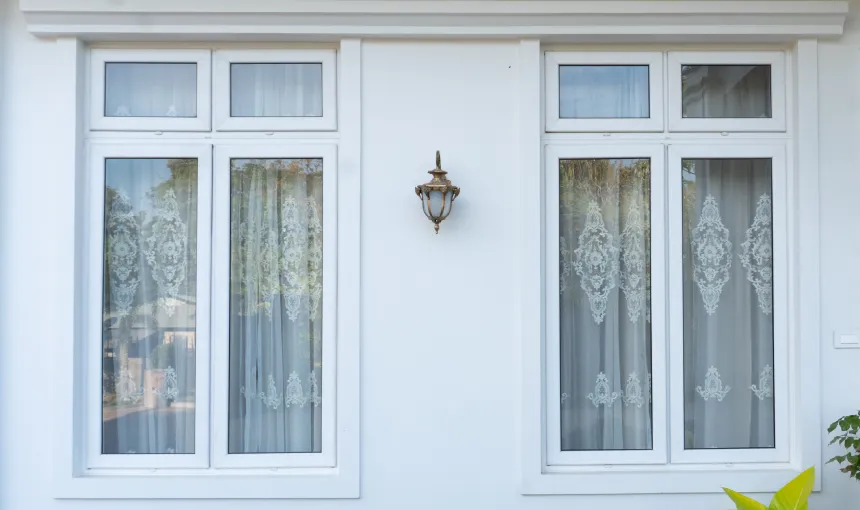
Modern homes are increasingly choosing uPVC (unplasticized polyvinyl chloride) windows because of their energy efficiency, low maintenance requirements, and longevity. Beyond its practical advantages, uPVC windows are available in a range of styles that are all intended to improve a home's ventilation, natural light, and overall appearance. Every architectural style and individual choice can be accommodated by an uPVC window type, ranging from sophisticated bay and French designs to traditional casement windows.
With an emphasis on their distinctive qualities and useful applications, the article below examines the many varieties of uPVC windows.
1. Casement Windows:
Casement windows are known as the most common type of uPVC window. They are hinged on one side and open outward like a door. Casement windows are easy to operate, and their design allows for maximum ventilation. They are also highly energy-efficient and provide excellent insulation, which further helps keep your home warm in the winter and cool in the summer.
Uses:
- Amplifies the beauty of the interiors.
- Offers cross-ventilation.
- Open inward or outward.
- Enhanced security.
- Panoramic view of the exterior.
2. Sliding Windows:
Sliding windows are also known as horizontal sliding windows. They are designed to slide open from left to right or right to left, and they are ideal for rooms with limited space. Sliding windows offer excellent natural light and ventilation and are easy to operate. They are also highly energy-efficient and provide excellent insulation. You can check out the fantastic sliding window variety on the AIS Windows website.
Uses:
- They can be fitted to minimise space utilisation.
- Easy to operate with back-forth sliding.
- Provides great ventilation and aesthetics.
- Durable and weather-resistant.
- Energy-efficient and eco-friendly.
- Perfect to use for small residences, hotel rooms and hospital wards.
3. Tilt and Turn Windows:
Tilt-and-turn windows are versatile and practical. They open inward, allowing you to clean the exterior of the window from inside your home. Tilt-and-turn windows can be tilted inward from the top for ventilation, or they can be turned inward from the side for maximum ventilation. They also offer excellent insulation and are highly energy efficient.
Uses:
- Intelligent operability.
- Flexibility in choosing the window design.
- Using its sash, you can open it at an angle or completely inward like a standard window.
- Provides high safety with low maintenance.
- Economical use.
4. Fixed Windows:
Fixed windows are also known as picture windows. These windows are designed to provide an unobstructed view of the outdoors and are ideal for rooms where natural light is essential. Fixed windows cannot be opened, and they do not offer any ventilation. However, they are highly energy-efficient and provide excellent insulation.
Uses:
- Provide ample sunlight.
- Add an aesthetic window of all kinds of geometric shapes, colours, and sizes.
- Provides sound insulation and minimises noise.
- Ensure long-term benefits and versatility.
5. French Windows:
French windows are designed to add a touch of elegance to any room. They consist of two casement windows that open outward from the center. French windows are highly energy-efficient and provide excellent insulation. They also offer amazing natural light and ventilation.
Uses:
- Double-sashed casement windows.
- Allows resplendent views.
- Enhances overall aesthetics with a stylish and modern look.
- Extended security with multi-locking system.
- Energy efficiency and noise control.
6. Louver Windows:
Louver windows have horizontal slats set within a strong uPVC frame, providing continuous ventilation while shielding interiors from direct sunshine and rain. They are perfect for spaces such as restrooms, kitchens, and utility rooms where airflow is required but full window openings are not feasible. Their elegant form also provides seclusion and good light management, ensuring comfort in all seasons.
Uses:
- Provides continuous airflow while retaining privacy.
- Protects interiors from excessive heat and rain.
- Ideal for restrooms, kitchens, and utility areas that require constant ventilation.
- The adjustable slats allow for easy control of light and wind.
- Highly durable and built to last.
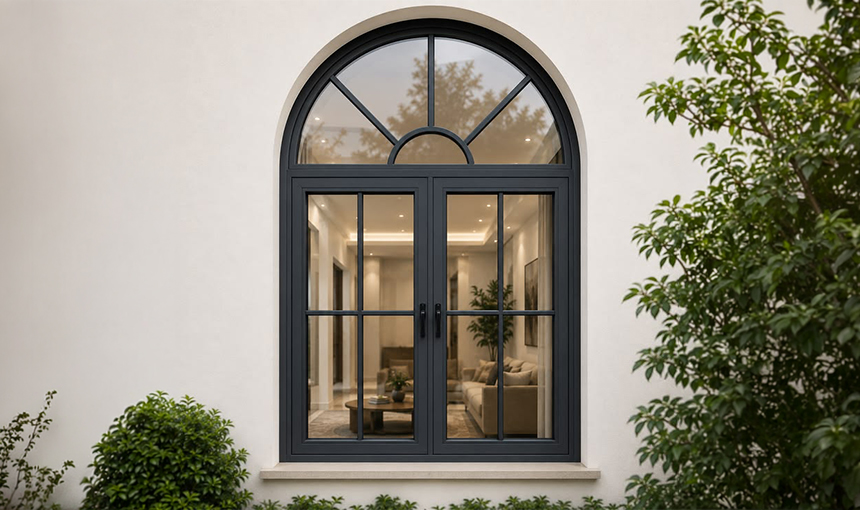
7. Curved Windows:
Curved or arch windows provide a distinct architectural element to any home. Their beautifully rounded frames soften the appearance of straight walls and add an elegant, timeless beauty to both interiors and exteriors. Despite their distinctive appearance, they have the same durability, insulation, and low maintenance requirements as ordinary uPVC windows, making them both elegant and functional.
Uses:
- Elegant, arched design adds to architectural attractiveness.
- Adds timeless elegance to both indoor and outdoor areas.
- Provides superior natural light because of its larger surface area.
- Provides aesthetic versatility while remaining extremely durable.
- Ideal for creating a striking façade with uPVC performance benefits.
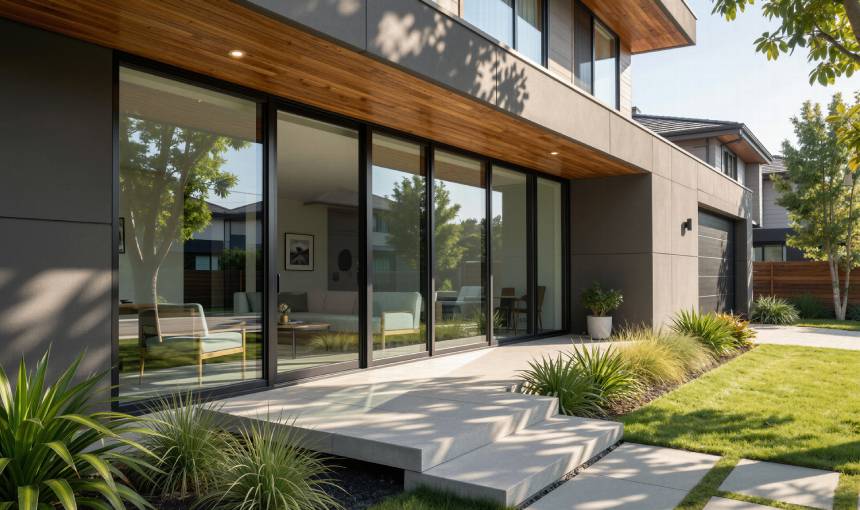
8. Glass To Glass Windows:
Glass-to-glass windows exhibit a modern, seamless appearance by linking glass panels at the corners rather than using bulky frames or mullions. This design maximizes natural light and offers expansive, unhindered outdoor views. They are ideal for living rooms, lounges, and contemporary areas, as they increase interior openness while providing high insulation and energy efficiency.
Uses:
- Natural light is maximised by continuous corner-to-corner glazing.
- Provides clear panoramic outdoor views.
- Increases openness in living rooms, lounges, and premium spaces.
- Maintains great insulation while providing a sleek, streamlined appearance.
9. Top Hung Windows:
Top-hung windows are hinged at the top and swing outward from the bottom, providing controlled circulation even in light rain. This design is ideal for restrooms, stairwells, and upper wall locations when space is limited. Their outward-opening mechanism allows for optimum ventilation, convenience of operation, and superior weather resistance.
Uses:
- Controlled ventilation is available even when there is light rain.
- Ideal for smaller spaces including toilets, stairwells, and higher wall placements.
- Easy to use, with a smooth outward opening from the bottom.
- Provides greater weather resistance and lifespan.
- Enhances functional convenience without compromising aesthetic appeal.
10. Twin Sash:
Twin sash windows blend the beauty of traditional sash designs with modern uPVC advantages. They have two moveable sashes, one with glass and the other with mesh, which allow for ventilation while keeping insects and dust out. These windows improve energy efficiency, offer safe locking, and have a timeless design that compliments a variety of home types.
Uses:
- Combines glass and mesh sashes to provide ventilation free of insects and dust.
- Improves energy efficiency and indoor comfort.
- Provides flexible applications for both conventional and modern home designs.
- Provides secure locking mechanisms for increased security.
11. Combination Windows:
Combination windows are designed to provide the benefits of different types of windows in one unit. For example, a combination window may have a fixed window at the top and a casement window at the bottom. Combination windows are highly versatile and offer excellent natural light and ventilation. They are also highly energy-efficient and provide excellent insulation.
Uses:
- Provides the benefits of several window designs in a single, versatile unit.
- Provides optimal ventilation through flexible design options such as casement + fixed or sliding + fixed combinations.
- Ideal for large wall openings requiring both openness and airflow.
Conclusion:
uPVC windows are available in different types, and each type has its own unique benefits and features. The type of window you choose by AIS Windows for your house will depend on your specific needs and preferences. Whether you want to add a sense of simplicity or elegance to your home, maximize natural light and ventilation, or improve energy efficiency, there is a uPVC window type that will meet your requirements.
To know more about the uPVC windows cost, visit our detailed guide linked above to compare pricing, features, and system options. If you’re looking to buy uPVC windows or aluminium systems, costs can vary depending on design, dimensions, glass selection, and custom requirements. For accurate pricing, call 1800 1034 805 or connect with a nearby dealer to get aluminium windows near you.
Recent Blogs
Trending Blogs


-

AIS Windows : 17F, New Industrial Town, Industrial Area, Rajiv Gandhi Colony, New Industrial Town, Faridabad Haryana 121001
-
AIS Windows : B-14, Avigna, Space Industrial and Logistics Park, Nagondapalli, Hosur, Tamil Nadu 635110
-

-


